Sustainable construction is no longer confined to metros like Mumbai, Delhi, or Bengaluru. A powerful shift is underway, Tier-2 and Tier-3 cities such as Coimbatore, Ujjain, Bhubaneswar, and Raipur are rapidly embracing green building practices. Rising energy costs, growing climate awareness, and supportive government policies are driving this transformation.
At BBAPL, we’re proud to be part of this movement, integrating sustainable design principles, energy-efficient engineering, and environmentally responsible construction across industrial and infrastructure projects. According to the Indian Green Building Council (IGBC, 2025), India now has over 7,000 certified green projects, with cities like Indore leading the Tier-2 surge with more than 170 certified buildings.
As infrastructure expands, smaller cities are uniquely positioned to adopt sustainable designs from the ground up, and BBAPL is committed to building that greener future.
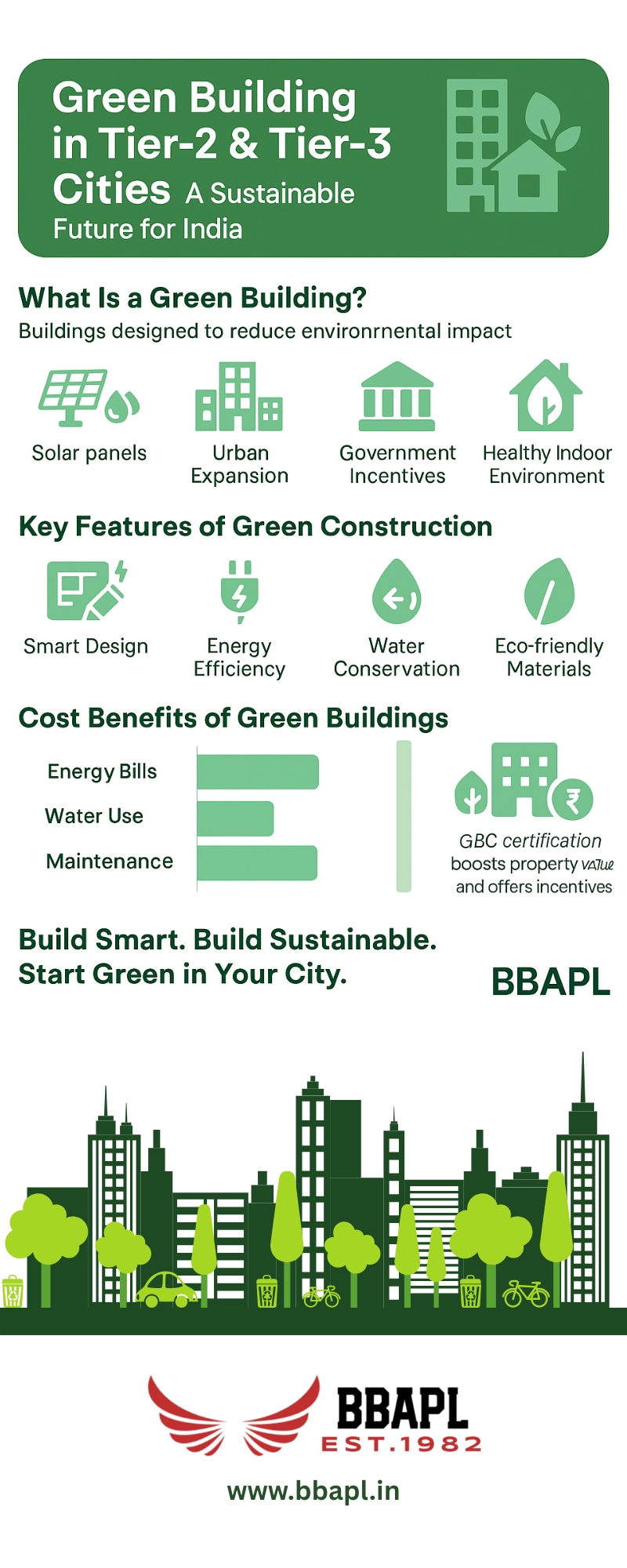
A green building uses natural resources wisely, reduces pollution, and provides a healthy indoor environment while consuming less energy and water. Key features often include:
For example, the Medical College Hostel in Vadodara (Gujarat) achieved a 3-star GRIHA rating, reducing water use by 25–30% and incorporating energy-efficient systems and sustainable materials.
At BBAPL, our structural and engineering expertise ensures sustainable design is integrated into every project, helping optimize resources, minimize environmental impact, and create eco-friendly, long-lasting spaces.
There are several reasons why green building in Tier‑2 cities is gaining traction. Let’s explore them:
As major cities become crowded, people and businesses are moving to Tier‑2 and Tier‑3 cities, which now offer better infrastructure, affordable land, and improved connectivity. Initiatives like the Smart Cities Mission and PM Gati Shakti are driving new infrastructure corridors, making these cities ideal for sustainable construction. New buildings can be designed from the start using eco-friendly materials and energy-efficient methods, ensuring long-term sustainability
While green buildings may have slightly higher upfront costs, they deliver strong long-term savings through lower electricity bills, reduced maintenance, and higher resale value. IGBC-certified buildings often command 5–10% higher resale prices, making sustainable construction a smart financial choice.
Indoor air quality, natural light, and thermal comfort are increasingly important. Green design creates healthy, nature-friendly spaces that support both physical and mental well-being, using sustainable materials efficiently.
Local and state authorities actively promote green construction. Incentives include tax rebates, faster approvals, and additional FAR for IGBC-certified buildings. At the national level, the Energy Conservation Building Code (ECBC) encourages energy-efficient design, making green buildings both environmentally and economically beneficial.
Green buildings in Tier‑2 and Tier‑3 cities are designed to minimize environmental impact while maximizing comfort and efficiency. They combine smart design, energy and water efficiency, and eco-friendly materials to create sustainable, cost-effective spaces.
Projects in cities like Gwalior and Indore, backed by BBAPL, have successfully integrated these principles, leveraging smart design, energy-efficient systems, and eco-friendly materials to create sustainable, high-performance buildings tailored for Tier‑2 urban growth.
Green buildings in Tier‑2 and Tier‑3 cities don’t just protect the planet, they improve the quality of life for occupants and the wider community:
Community Impact: Beyond individual buildings, green construction improves local air quality, reduces urban heat islands, and promotes public health by minimizing pollution and creating greener public spaces.
Despite their benefits, several challenges remain for sustainable construction in Tier‑2 and Tier‑3 cities:
By addressing these challenges through capacity building, policy clarity, and improved material supply chains, smaller cities can fully realize the benefits of sustainable construction.
India is committed to reducing its carbon footprint and improving the quality of life in urban areas, with a long-term goal of achieving net-zero emissions by 2070. The growth of green building in Tier‑2 and Tier‑3 cities is a significant step toward this target. By focusing on sustainable construction, these cities can:
Tier-2 cities play a key role by integrating Smart City and Green City initiatives, combining modern infrastructure with sustainable design principles. In the coming years, we can expect more schools, hospitals, offices, and homes in smaller cities to adopt IGBC standards and use eco-friendly materials, helping India move closer to its 2070 Net-Zero goal while promoting livable, future-ready urban spaces.
At BBAPL, we empower sustainable growth in Tier‑2 and Tier‑3 cities through expert engineering, structural design, material testing, and project management. With 40+ years of experience and NABL-accredited labs, we help developers and planners meet IGBC and ECBC standards.
For example, BBAPL has supported eco-residential projects in Indore and industrial facilities in Gwalior, integrating green materials and energy-efficient systems from the design stage. We also leverage AI-aided design and digital simulation tools to optimize energy efficiency, resource planning, and overall building performance.
We’re not just builders, we’re your green building partners, turning your vision into safe, energy-efficient, and eco-friendly solutions that align with India’s sustainable urban growth goals.
At BBAPL, we help you plan, engineer, and guide sustainable solutions that save energy, reduce costs, and meet the highest environmental standards.
Get expert guidance from BBAPL to design energy-efficient, sustainable projects in your city.
📞 Call us today for a consultation: +91 96301-50426
Let BBAPL guide your next green project with expert design, testing, and engineering solutions.
At BBAPL, we support sustainable infrastructure by offering structural design, engineering consultancy, and NABL-accredited material testing. Our solutions align with IGBC and ECBC standards, helping developers and planners build eco-friendly, future-ready projects.
Yes, BBAPL offers expert green building design services tailored for Tier‑2 and Tier‑3 cities. Our team follows IGBC and ECBC standards to ensure energy-efficient, sustainable, and cost-effective building designs. We help developers, architects, and planners bring their green vision to life through smart space planning, structural safety, and eco-friendly solutions.
Our NABL-approved labs test your building materials to make sure they are safe and eco-friendly. This helps your project earn IGBC points and pass quality checks.