Construction quality and material testing are the backbone of safe, durable, and future-ready structures. In today’s complex infrastructure environment, ensuring structural safety through strict quality control is not only about protecting investments, but it is also about safeguarding lives.
The ResearchGate highlights that the construction industry’s complexity, multiple stakeholders, materials, and processes, significantly increases the risk of defects, ranging from minor imperfections to major structural failures. This makes technical inspections and material testing indispensable.
Whether the project is residential, commercial, or industrial, adherence to rigorous quality assurance practices that meet and exceed regulatory standards forms the foundation of long-term structural performance.
Safe and durable infrastructure is built on uncompromising construction quality. Here’s why quality control is non-negotiable:
Reality check: Most structural failures trace back to compromised materials or unchecked workmanship, not design intent.
The scientific basis of quality control in construction is composed of material testing that gives objective information regarding the properties and performance of construction materials.
Such tests are used to ensure that the materials are used to uphold the noted standards during and before the construction process to avoid poor components that may pose a threat to structural integrity.
| Test Type | Purpose | Key Methods | Benefits |
|---|---|---|---|
| Concrete Testing | Verify strength and workability | Slump test, cube tests (7, 14, 28 days) | Ensures load-bearing capacity |
| Compaction Testing | Evaluate soil stability | Field density, Proctor tests | Prevents settlement issues |
| Steel Testing | Verify tensile strength | Tensile, UT, MT testing | Ensures reinforcement safety |
| Other Material Testing | Detect internal defects | NDT & environmental tests | Identifies flaws without damage |
The detailed information on the 5 construction mistakes to avoid is provided below for your reference.
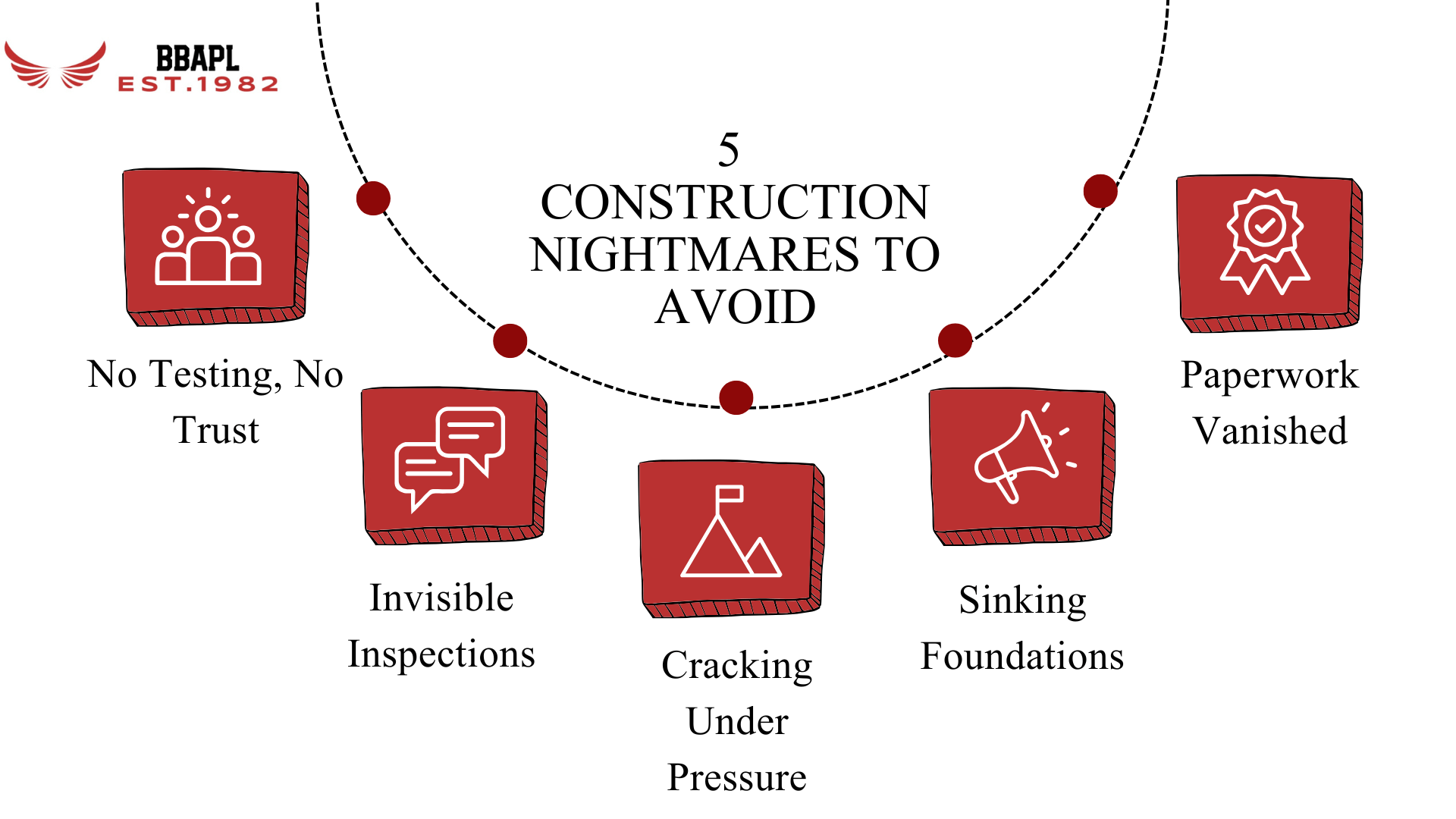
A good quality control in a construction system is a method that adheres to systematic steps in ensuring that there is compliance at each step of the project. The principle of this structured approach preserves structural integrity and combines civil engineering standards and client expectations.
BBAPL has been able to maintain the same quality of construction and tests of materials. This is achieved with the ability to incorporate strict engineering ideas, sophisticated testing procedures, and relentless commitment to adhere to the required standards of the industries in key industrial projects.
Consistent construction quality cannot be achieved without proper planning and continuous attention throughout the project lifecycle. Proven quality control strategies help ensure compliance, durability, and long-term performance.
Source construction materials only from reputable and certified suppliers with a proven quality track record. Verify material certifications and ensure they meet project specifications before approving them for on-site use.
Plan inspections at critical construction milestones. Routine site inspections help identify workmanship issues early, preventing minor deviations from becoming costly structural failures.
Test critical structural components through non-destructive testing (NDT) and selective destructive sampling. Laboratory verification ensures that materials and assemblies perform as intended under real-world conditions.
Invest in continuous training for engineers, supervisors, and site workers. A well-trained workforce understands quality expectations, follows best practices, and takes pride in delivering safe, compliant construction.
Maintain comprehensive records of inspections, test reports, approvals, and corrective actions. Thorough documentation demonstrates compliance, supports future maintenance decisions, and provides confidence to all stakeholders.
Pro tip: Quality documentation is often the strongest defense during audits, disputes, or future expansion approvals.
Construction quality isn’t a choice, it is the foundation of every safe and durable structure. With BBAPL’s expert material testing and quality control services, projects achieve code-compliant performance that protects investments and lives.
From new developments to existing structures, rigorous testing and disciplined inspections today ensure long-term value and operational confidence.
📞 Ready to build with confidence?
Email: info@bbapl.in
Phone: +91-9630150426
Bhargava Building Atelier Pvt Ltd. offers comprehensive material testing services in Gwalior, including concrete testing, compaction tests, soil analysis, and structural safety inspections for residential, commercial, and industrial projects.
Conduct inspections at key stages, foundation, framing, and finishing, with weekly checks during active construction in Madhya Pradesh.
Compaction test costs vary based on project size and soil conditions. Contact BBAPL Gwalior for customized quotes specific to your construction site requirements and testing frequency needs.
Yes, material testing is mandatory under building bylaws in MP. All construction projects must comply with civil engineering standards and submit quality test reports for structural safety certification and approvals.
Standard concrete cube tests require 28 days for final strength results. However, preliminary 7-day and 14-day test results help monitor construction progress while ensuring quality control compliance in Gwalior projects.
No related posts found.