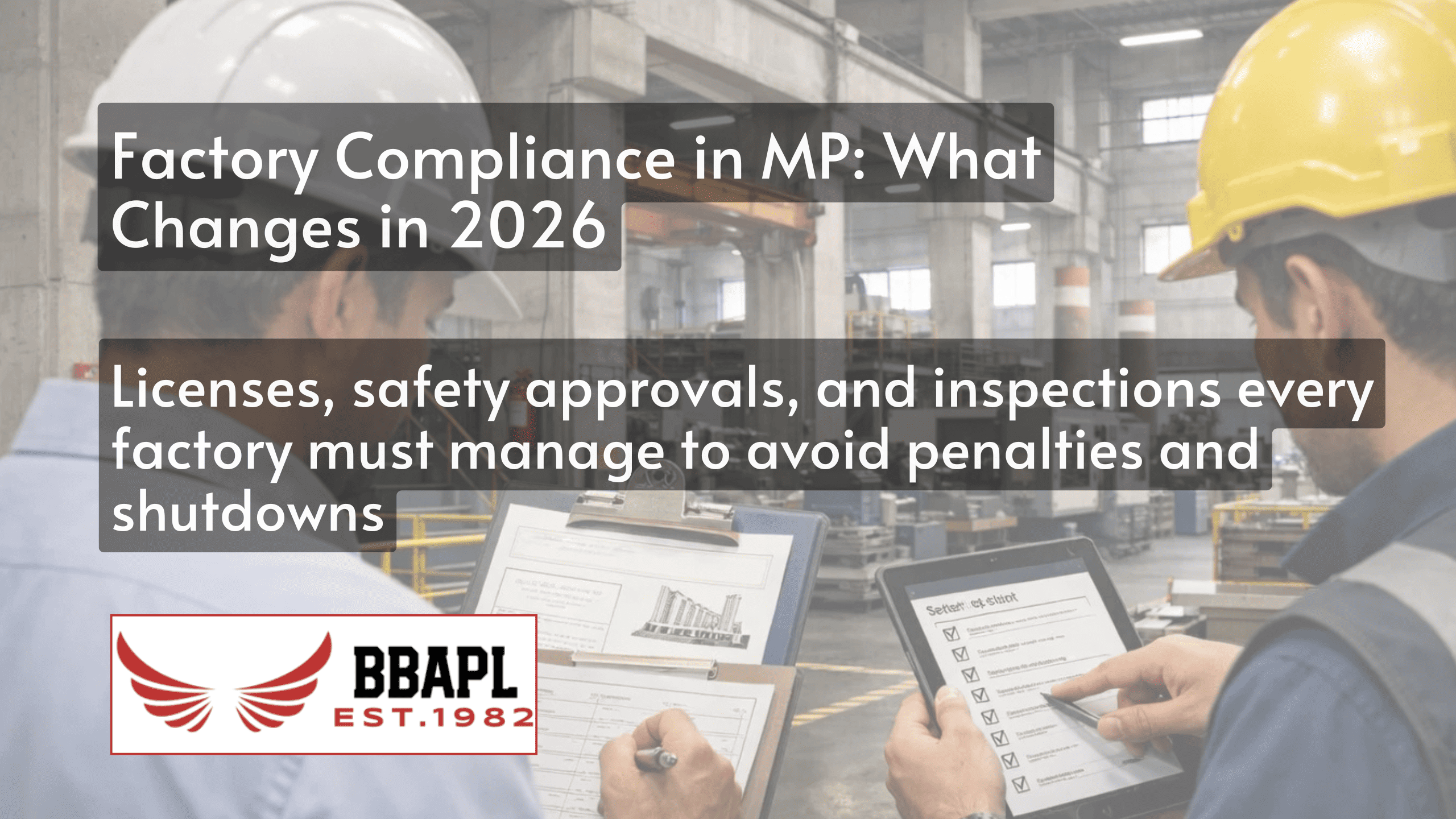
Did you know that a single missed renewal or incomplete document can force a factory to halt operations for weeks? In Madhya Pradesh’s tightening regulatory environment, factory compliance in 2026 is no longer a routine administrative task; it is a critical operational requirement.
Governments are paying closer attention to worker safety, environmental impact, and structural integrity, especially after a series of industrial accidents across India. In Madhya Pradesh, enforcement of factory compliance laws has become stricter, with inspections increasingly focused on structural approvals, fire safety readiness, and environmental compliance.
This guide explains how to navigate Madhya Pradesh-specific factory statutory obligations in 2026 to ensure uninterrupted, risk-free operations.
Factory statutory compliance refers to adherence to all applicable central and state laws governing factory operations. In Madhya Pradesh, this includes the Factories Act, 1948, MP Factories Rules, industrial safety laws, environmental regulations, and fire safety norms.
Compliance is mandatory to:
These factory statutory obligations in MP collectively ensure long-term operational stability and regulatory confidence.
| Authority | Role | Quick Explanation |
|---|---|---|
| Directorate of Industrial Health & Safety (DIHS) | Licensing & inspections | Oversees factory registration and safety enforcement |
| Chief Inspector of Factories MP | Compliance enforcement | Grants licenses, conducts factory inspections, initiates legal action |
| Madhya Pradesh Pollution Control Board (MPPCB) | Environmental compliance MP | Issues Consent to Establish & Operate |
| Fire Services Department | Fire safety approvals | Approves fire systems and emergency preparedness |
The Chief Inspector of Factories MP is the primary authority responsible for enforcing factory compliance laws in the state. This office oversees factory inspections in MP, evaluates license renewals, and ensures adherence to industrial safety laws.
Key responsibilities include:
Factory inspection in MP has become increasingly data-driven, with repeat inspections triggered by accident history, structural changes, or environmental violations.
Timely renewals are essential for legal factory operations. Missing or expired approvals are among the top reasons for penalties under factory compliance laws MP.
| License / Approval | Renewal Frequency | Purpose |
|---|---|---|
| Factory License | Annual / as specified | Confirms compliance with operational & safety norms |
| Building Plan Approval | After modifications | Mandatory if layout or machinery load changes |
| Consent to Establish (MPPCB) | One-time | Required before construction |
| Consent to Operate (MPPCB) | 1–5 years | Mandatory for ongoing production |
| Fire NOC | 1–3 years | Ensures fire safety preparedness |
A structural stability certificate confirms that factory buildings can safely withstand machinery loads, operational stresses, and environmental forces.
| Situation | Requirement | Explanation |
|---|---|---|
| New factory | Mandatory | Required before operations begin |
| Structural modification | Renewal required | Needed for mezzanines, heavy machinery, layout changes |
| Damage or disaster | Immediate reassessment | Ensures continued worker safety |
| Periodic audit | Every 5–10 years | Validates long-term structural integrity |
Industrial safety laws regulate:
Organized documentation is critical to avoid renewal delays during factory inspections in MP.
| Document | Purpose |
|---|---|
| Structural drawings & engineering reports | Verify current layout and load calculations |
| Structural stability certificate | Confirms building safety |
| Safety audit & electrical certificates | Validates machine, fire, and electrical safety |
| Previous licenses & inspection records | Shows compliance history |
| NABL lab reports | Environmental or equipment testing (if applicable) |
Inspection frequency depends on risk category:
Special inspections may occur due to:
These issues are frequently flagged during factory inspections in MP and can result in penalties or shutdowns.
Factory compliance in MP in 2026 demands proactive management of licenses, structural certifications, safety systems, and environmental approvals. Early action prevents penalties, avoids shutdowns, and ensures uninterrupted manufacturing operations.
Treat factory compliance as a continuous operational system, not a yearly formality, to achieve long-term safety, stability, and regulatory confidence.
For expert guidance on MP factory compliance, contact us at
📞 +91-9630150426
info@bbapl.in
Factory compliance in MP means meeting all legal requirements under the Factories Act, MP Factories Rules, safety laws, and environmental regulations.
Factory inspections in MP are conducted by the Chief Inspector of Factories MP under the Directorate of Industrial Health & Safety.
Yes, a valid structural stability certificate is mandatory, especially after structural changes or heavy machinery installation.
Most factory licenses in MP require annual renewal, while environmental and fire approvals have separate validity periods.
Non-compliance can lead to penalties, license suspension, or temporary factory shutdowns during inspections.