News

BBAPL Monthly Newsletter: February 2026

February 2026 marked another performance-driven month for Bhargava Building Atelier Pvt. Ltd., powered by advanced structural design expertise and consistent laboratory excellence across Madhya Pradesh.

With 25+ structural design assignments and 40+ laboratory tests executed with precision, our teams ensured compliance, accuracy, and timely delivery for industrial and infrastructure projects.

On the digital front, BBAPL achieved 39,000+ Google impressions, generating 350+ organic clicks, reflecting growing technical visibility and strengthened industry positioning online.

By combining engineering intelligence with validated testing processes, we continue to enhance structural safety, regulatory readiness, and long-term project reliability, both on ground and in the digital ecosystem.

BBAPL February Newsletter 2026

Read More

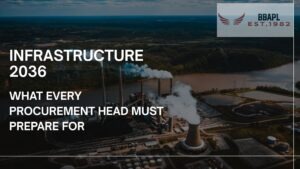
The Next Decade of Infrastructure: What Procurement Heads Must Know

India is going through a defining decade of infrastructure expansion. Investments in transport, logistics, housing, utilities, and digital systems are reshaping the country’s growth trajectory under the National Infrastructure Pipeline. By 2036, India is projected to require nearly $840 billion in infrastructure investment, an average of $55 billion annually, or roughly 1.2% of GDP per year, underscoring both the scale and urgency of execution (World Bank).

However, infrastructure scale alone does not guarantee performance. Every corridor, plant, or command center carries a procurement decision that determines lifecycle cost, compliance exposure, resilience, and adaptability. Over the next decade, India’s success will not be defined merely by how much it builds, but by how intelligently and strategically it chooses to execute.

1. Moving Beyond Lowest-Bid (L1) Procurement

The L1 model was mostly concerned with obtaining cost efficiency upfront. In the modern infrastructure environment, such a solution is becoming inadequate. The modern assets are long-term (30 to 50 years and more), digitally connected, climate-exposed, ESG-regulated and are strongly linked to financing structures. Even a small saving during the procurement phase would result in a much greater cost of lifecycle maintenance or operational risk or costly retrofits in the future.

Procurement should thus tend to transform into lifecycle costing models, ESG-conformant vendor prequalification, risk-based scoring system and performance-based technical scoring. It is not a transactional role anymore with a focus on price bargaining but a long-term asset management mechanism of control over risks.

2. Procurement in Emerging City Growth Corridors

The infrastructure momentum is going beyond the metro hubs to include cities like Indore, Surat, Coimbatore, Bhubaneswar and Lucknow.

The markets present new realities of procurement:

  • Thinner vendor ecosystems
  • Changing quality control system
  • Faster project timelines
  • Issues of multi-disciplinary contractor coordination

Leaders need to develop procurement models that are consistent with quality and responsive to the local execution environment.

3. Climate & ESG as Procurement Imperatives

Climate volatility is no longer a risk in the future, it is a reality in the present. Infrastructure stability, underwriting, funding sources and performance of assets in the long term are all directly affected by extreme temperatures, flooding and the ever changing environmental compliance.

The procurement choices on the materials and the selection of vendors have now had an impact on the structural resilience, the carbon reporting requirements and the access to green or sustainability-linked funds. The ESG expectations are becoming stricter both in the public and the private sectors and therefore compliance is becoming a strategic requirement and not a reputational option.

Embedding Climate Resilience into Technical Specifications & Material Standards

Procurement teams should incorporate heat and flood resistant materials and low carbon materials in the design briefs so that infrastructure can be able to handle the environmental pressures but use lifecycle efficient materials.

Strengthening ESG Screening, Vendor Due Diligence & Carbon Cost Integration

To mitigate the risk in the long term, tender frameworks must include the ESG eligibility requirements, organized sustainability audits, carbon disclosures of suppliers, and carbon-adjusted lifecycle cost modeling.

Ignoring climate variables is no longer a design gap, and a direct cost and governance liability.

4. Smart Infrastructure Requires Digital Competency

The use of technology is a mainstream activity in plans such as the Smart Cities Mission. Projects are becoming more and more about:

  • Smart monitors using IoT
  • Mobile management driven by AI
  • Integrated command centers
  • Automated utilities

The procurement structures have now to evaluate:

  • System interoperability
  • API compatibility
  • Cybersecurity compliance
  • Data governance standards
  • Upgradeability in the future

The choice of inappropriate technology partner may lead to the production of long-term operational lock-in and cost inflation.

5. From Reactive Buying to Strategic Supply Chain Leadership

Supply chain vulnerability has been revealed in steel, cement, electronics and specialty components due to the global volatility. Infrastructure acquisition should shift to:

  • Extended relationship with vendors
  • Varying price locked deals on volatile types
  • Alternative sourcing pipelines
  • Sustainability and financial cross-functional planning

Actionable Takeaways for Procurement Leaders

  • Lifecycle ESG-Oriented Procurement: Move beyond L1 evaluation. Incorporate lifecycle costs, ESG screening, vendors performance history and long term maintenance implications in tender decisions.
  • Urbanization & New City Planning: Build elastic procurement frameworks, Tier-2 and Tier-3 markets, standardize quality standards and customize to the local vendor ecosystems and execution conditions.
  • Material Choices That are Climate Resilient: Integrate climate risk in material specifications. Focus on heat-resistant, flood-tolerant and low-carbon materials in accordance with sustainability and financing needs.
  • Intelligence Infrastructure / Technology Preparedness: Procurement capability upgrade to test digital infrastructure — test interoperability, cybersecurity, data governance and long term scalability and cost.
  • Strategic Supply Chain Management: Change reactive buying to long term sourcing. Price locking of volatile materials, diversify suppliers, coordinate procurement, financial and sustainability teams.

The Defining Decade

India’s infrastructure investment cycle is generational. The models that are being institutionalized now will dictate the way the assets will perform over decades. The leaders of the procurement are no longer pure cost controllers. They are custodians of resiliency, compliance, technological flexibility, and asset value in the long term.

There is a fast development of infrastructure. The question is whether the procurement strategy is keeping up with the pace.

Read More

BBAPL Monthly Newsletter: January 2026

January 2026 marked a high-impact month for Bhargava Building Atelier Pvt. Ltd., driven by rigorous structural design, stability certification, and large-scale material testing across Madhya Pradesh.

With 25+ design and stability assignments and 90+ laboratory and site tests, our teams delivered precision, compliance, and timely execution for industrial, government, and infrastructure projects. Alongside engineering excellence, BBAPL strengthened its digital presence with growing global visibility, technical publications, and active knowledge sharing.

By integrating testing, analysis, and design validation, we continue to reduce structural risk and deliver long-term reliability, on site and online.

January Monthy 2026 Newsletter

Read More

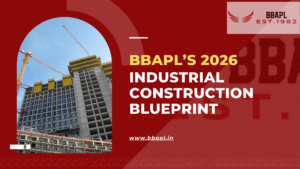
The 2026 Blueprint: 5 Industrial Construction Trends BBAPL is Pioneering This Year

There is an unprecedented transformation in the industrial construction landscape. The construction sector is expected to grow to a total of 2.3% in 2026, and therefore any company that innovates today will capture the market of tomorrow (glassglobal).

As the industry is struggling to cope with labor crunches, increasing material prices, and the changing needs of their clients, five disruptive trends are emerging at the cutting edge of industrial facility design, construction, and operation that are being pioneered by Bhargava Building Atelier Pvt. Ltd..

Trend #1: Smart Construction Technology Integration

What It Is:

IoT sensors, AI-based project management hardware, and sophisticated Building Information Modeling (BIM) in industrial projects.

Why It Matters:

  • Monitoring of the data in real-time saves rework up to 30%.
  • Predictive analytics foresee delays before it affects timelines.
  • Digital twins are simulated to build a series of constructions to detect conflicts during the initial stages.

How BBAPL is Leading:

BIM processes help us to identify and prevent occurrences of clashes before commencing any groundwork, ensuring constrained budgets and accelerated delivery. A manufacturing facility project is one of the recent projects that was delivered 12% below the budget due to the early identification of conflicts.

Trend #2: Modular and Prefabrication Excellence

What It Is:

Off-site construction in which large building parts are prefabricated under controlled conditions, as the site preparation occurs at the same time.

Why It Matters:

  • 40% faster completion times
  • High-quality management in regulated environments.
  • Better safety of workers and minimized weather delays.
  • Important to customers who work under stringent production schedules.

How BBAPL is Leading:

BBAPL has spent a lot on prefabrication. Our recent distribution center was completed in 9 months with a space of 75,000 square feet, compared to the 14 months in the traditional way.

Trend #3: Sustainable and Net-Zero Construction

What It Is:

Green building designs involve the use of recycled materials, low-carbon products, and energy-efficient mechanisms to lessen the effects on the environment.

Why It Matters:

  • Complies with reporting requirements and regulations of ESG.
  • Reduces the cost of operations that are long-term.
  • The roles make facilities future responsive and accountable.
  • Sustainability as a competitive advantage.

How BBAPL is Leading:

Our projects comprise recycled steel, low-carbon concrete, high-quality insulation, smart lighting systems based on LEDs, and solar-ready infrastructure. We take clients through LEED certification.

Trend #4: Advanced Safety Systems and Worker Wellbeing

What It Is:

Safety technology devices, close-range notifications, artificial intelligence hazard detection, and comprehensive wellness initiatives for the worker.

Why It Matters:

  • What is important is safeguarded by a zero-harm culture.
  • Reduced insurance premiums and reduced project delays.
  • Recruits the best construction skills.
  • Worker satisfaction is related to greater productivity.

How BBAPL is Leading:

Our locations make use of wearables that track worker fatigue, distance alarms helping avoid equipment mishaps, and artificial intelligence cameras that detect hazards instantly. Our offerings include mental health services, ergonomic training, and wellness programs.

Trend #5: Adaptive Infrastructure for Industry 4.0

What It Is:

Future-proofed facility architecture that can support automation, robot integration, and process modifications without costly retrofits.

Why It Matters:

  • Secures the investments of clients against technological obsolescence.
  • Eliminates the expensive renovation requirements in the current transformations of operations.
  • Favors smart production and smart manufacturing.
  • Offers expansion capability.

How BBAPL is Leading:

Our drawings are built in large electrical structures that can be expanded into flexible layouts. We ensure that we have the fewest structural interruptions and an enhanced data infrastructure to cater to future technology.

The BBAPL Advantage

These five trends are not stand-alone projects; they are collaborative to come up with holistic solutions.

Prefabrication planning can be done better with smart technology. Sustainable design has modular designs. Sophisticated safety measures secure employees constructing customized facilities.

Our Commitment:

Innovation at BBAPL implies the provision of quantifiable value in terms of reduced timeframe, reduced cost, improved quality, improved safety, and decades of service to clients.

Why It Matters Now:

The construction sector is at a crossroads. Those companies that adopt these advances will prosper, and others will find it difficult to compete.

Let’s Build Your Future

Ready to explore how these trends can benefit your next industrial project?

Next Steps:
Contact our team to schedule a consultation and discover how BBAPL’s pioneering approach delivers superior results for your specific needs.

The future of industrial construction is here. Let’s build it together.

About BBAPL

BBAPL is a leading industrial construction firm specializing in innovative, sustainable, and technology-driven building solutions that exceed client expectations and industry standards.

Connect With Us

📞 +91-9630150426 | ✉️ info@bbapl.in | 🔗 BBAPL LinkedIn

Read More

At BBAPL, we don’t just design — we bring your ideas to life with precision, creativity, and engineering excellence. Let’s Build Your Vision

Enquire Now

Already a member? Sign in now

Unlock BBAPL Exclusive Newsletter Today!

Subscribe Now
Trusted & Certified