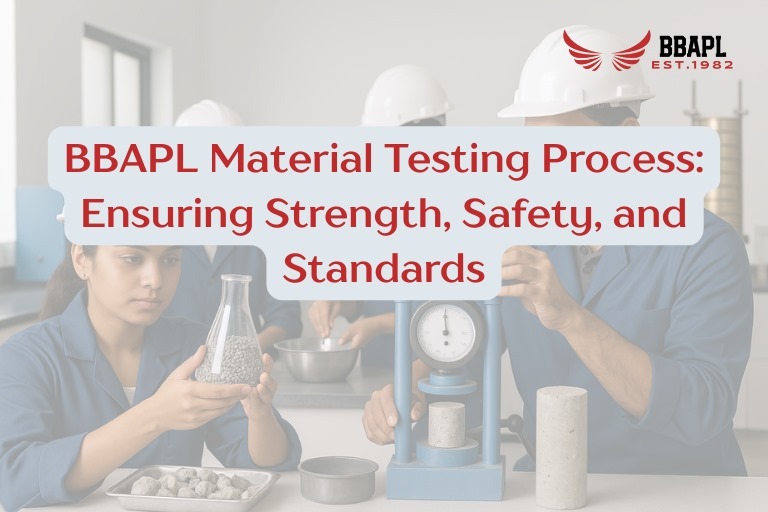
Material testing is the process of evaluating the strength, durability, and quality of construction materials such as concrete, steel, soil, and aggregates to ensure compliance with IS standards and safety requirements.
Globally, the material testing market is witnessing strong growth, driven by rising demands for safety, quality assurance, and advancements like AI and automation. With projections ranging from $1 billion to $9.4 billion by 2030–2034, the industry is expanding alongside infrastructure development (marketsandmarkets). The need for high-performance materials in sectors like construction, automotive, and aerospace.
In construction, even a minor compromise in material quality can lead to structural instability, safety risks, cost overruns, or failed inspections. A structured testing process helps detect issues early, ensure compliance, and improve overall project performance.
Understanding the NABL material testing lab process in construction helps ensure consistency, accuracy, and compliance at every stage.
Material testing is not just a technical requirement, it is a critical safeguard that ensures structural safety, stability, and full compliance with IS standards and regulations. By verifying the quality of materials before and during construction, it helps maintain the integrity of the entire project.
It enables early detection of weak or defective materials, reducing the risk of costly rework, delays, and failures. Ultimately, a proper testing process contributes to the long-term durability and performance of buildings and infrastructure.
Various construction materials should have special testing procedures to ensure their strength, durability, and standard performance. Both tests are essential in providing structural reliability and avert project failures throughout the project lifecycle.
A NABL-accredited material testing lab ensures that all testing processes are standardized, reliable, and conducted using properly calibrated equipment. The results generated are widely accepted for government approvals and large-scale projects, ensuring consistency and trust in quality assessments.
Additionally, NABL certification ensures that testing procedures are legally compliant and audit-ready, reducing the risk of regulatory issues. For infrastructure and industrial projects, choosing a NABL-certified lab enhances credibility while minimizing compliance risks and project uncertainties.
| Material | Purpose of Testing |
|---|---|
| Soil | Foundation strength and load capacity |
| Aggregates | Strength and mix suitability |
| Cement & Concrete | Durability and compressive strength |
| Bitumen & Asphalt | Road performance and quality |
| Steel & Bars | Tensile strength and flexibility |
| Bricks/Blocks | Structural integrity and absorption |
| Construction Water | Safe mix preparation |
| Mix Design | Cost-efficiency and performance |
| NDT (Non-Destructive Testing) | Real-time structural condition |
Material testing is essential across multiple sectors, including public infrastructure projects such as roads, bridges, and government developments, as well as industrial and manufacturing units. It also plays a crucial role in commercial and residential real estate projects where safety and quality are critical.
Additionally, large-scale developments and industrial parks rely heavily on accurate material testing to maintain structural integrity and meet regulatory standards. Across all these sectors, reliable testing ensures safety, compliance, and long-term performance.
Material testing in Indian construction is a critical process that ensures safety, compliance, and long-term performance. From sample collection to final reporting, each step plays a vital role in maintaining quality standards.
Choosing a reliable, NABL-accredited testing partner ensures that construction projects are built on verified data, reducing risks and improving overall efficiency. Build with confidence by ensuring your materials meet the highest standards of quality and safety. Partner with a trusted NABL-accredited testing lab for accurate results and compliant construction.
BBAPL follows key Indian Standard codes such as IS 456 for concrete, IS 2386 for aggregates, IS 4031 for cement, and IS 1498 for soil classification, ensuring all tests meet national quality norms.
NABL accreditation ensures all testing is done using calibrated equipment, qualified experts, and standardized methods, making the results accurate, traceable, and audit-ready.
Destructive testing measures strength by breaking or altering the sample, while non-destructive testing (NDT) checks material properties without causing any damage.
Yes, BBAPL’s NABL-accredited reports are fully accepted for CPWD, PWD, and other government project audits across India.
CMT stands for Construction Material Testing, which involves assessing materials like soil, concrete, and steel to ensure they meet required strength, durability, and safety standards.
Talk to Our Experts Today — We're just a call or message away.

Already a member? Sign in now